
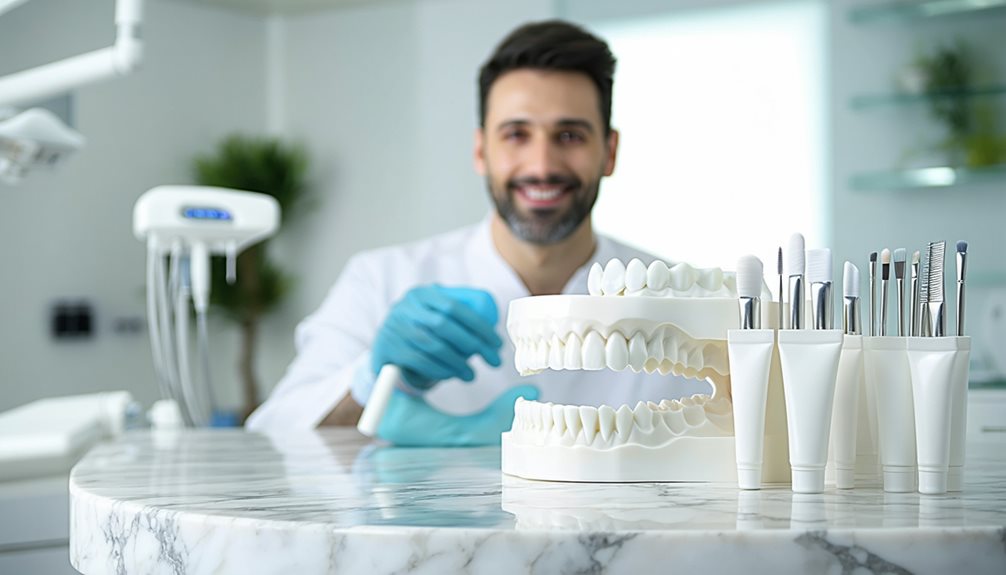
Top dentists recommend a thorough approach to teeth whitening for ideal results. Begin with a professional evaluation to tailor treatments to your dental history and discoloration causes. Effective options include over-the-counter kits containing carbamide peroxide and in-office laser-assisted procedures. Precautionary measures, like custom-fitted trays and protective barriers, safeguard against irritation. Post-whitening care is vital; use desensitizing toothpaste and avoid hot or cold foods. Regular check-ups and lifestyle adjustments, such as minimizing coffee and red wine consumption, are important for maintaining brightness. Engage with these expert insights to enhance the effectiveness and longevity of your teeth whitening journey.
Understanding Teeth Whitening Options
When exploring the domain of teeth whitening, it is essential to comprehend the various options available to achieve a brighter smile. Among these options, home remedies and whitening kits are frequently considered by individuals seeking effective yet convenient solutions.
Home remedies, such as baking soda and hydrogen peroxide mixtures, offer a cost-effective approach. This method leverages mild abrasives and bleaching agents to address surface stains on the enamel, although results may vary based on individual enamel sensitivity and consistency of use.
Whitening kits, available over-the-counter, present a more structured alternative. These kits typically include bleaching agents in the form of gels or strips that adhere to the teeth, allowing for uniform application. The active ingredient, often carbamide peroxide or hydrogen peroxide, penetrates the enamel to break down stains. Users must adhere to specified application times to minimize the risk of enamel damage or gum irritation.
For those desiring innovation in their dental care routines, integrating these solutions with personalized oral hygiene practices can enhance outcomes.
Benefits of Professional Whitening
Professional teeth whitening offers significant advantages, including enhanced aesthetic appeal and long-lasting results.
By employing advanced techniques and high-quality materials, dental professionals can achieve a level of brightness that is difficult to replicate with over-the-counter products.
Additionally, the results of professional treatments are typically more durable, providing patients with a sustained improvement in the appearance of their smile.
Enhanced Aesthetic Appeal
A frequently cited benefit of professional teeth whitening is its ability to markedly enhance the aesthetic appeal of one’s smile. This enhancement stems from advanced techniques employed by dental professionals, which result in improved teeth aesthetics compared to over-the-counter solutions. By utilizing tailored treatments that account for individual tooth structure and discoloration severity, dentists guarantee that the whitening process is both effective and safe.
The cosmetic appeal of a professionally whitened smile extends beyond mere surface changes; it fundamentally transforms the visual harmony of one’s dental presentation.
Professional whitening services offer a precise application of bleaching agents, achieving uniformity and brightness that are difficult to replicate with non-professional methods. The process often involves a customized approach, wherein the concentration of whitening agents is meticulously calibrated to optimize results while minimizing potential adverse effects on enamel integrity.
This bespoke treatment guarantees that the end result aligns with the desired level of brightness and natural appearance.
Moreover, the psychological impact of an enhanced smile can be profound, contributing to increased self-esteem and confidence. Individuals seeking innovative and superior teeth aesthetics find professional whitening to be a worthwhile investment in both personal and professional domains, thereby elevating their overall image.
Long-Lasting Results
Achieving long-lasting results is a hallmark benefit of professional teeth whitening. This advanced dental procedure leverages cutting-edge technology and highly concentrated whitening agents, which are not accessible in over-the-counter solutions. As a result, patients enjoy superior and enduring outcomes characterized by dramatically brighter teeth. The effectiveness of professional whitening is not only immediate but also sustainable, ensuring that the investment in dental aesthetics yields prolonged satisfaction.
Central to achieving these enduring results is the emphasis on long-term maintenance. Professional teeth whitening services often include customized follow-up plans, enabling individuals to preserve their enhanced appearance. Dentists may recommend specific whitening frequency intervals, tailored to the individual’s lifestyle and dietary habits, to mitigate re-staining and maintain the desired level of whiteness.
Additionally, innovations in whitening formulations and techniques reduce enamel sensitivity, allowing for a more comfortable experience.
For those seeking innovative solutions, professional whitening offers a sophisticated approach that transcends temporary fixes. By integrating personalized maintenance strategies and considering the best whitening frequency, patients can achieve not only immediate but also sustained improvements in their dental aesthetics.
This commitment to long-term excellence underscores the transformative potential of professional teeth whitening in modern dentistry.
How Dentists Achieve Best Results
Dentists employ a combination of advanced techniques and state-of-the-art technology to achieve ideal teeth whitening results. The process begins with thorough patient consultations, which are vital for tailoring each treatment to the individual’s unique needs. This personalized approach guarantees that the selected whitening techniques deliver excellent results.
Dentists typically follow a strategic methodology to maximize the effectiveness of whitening procedures:
-
Assessment and Diagnosis: Initial consultations help in evaluating the patient’s dental history and identifying the causes of discoloration. This step is important for customizing the treatment plan.
-
Selection of Whitening Technique: Based on the assessment, dentists choose from a variety of techniques, such as in-office bleaching or prescription-strength at-home kits. This selection is critical in achieving the desired shade.
-
Application of Technology: Cutting-edge technologies, such as laser-assisted whitening, are employed to enhance the effectiveness and speed of the treatment process. These innovations are designed to produce superior results with minimal discomfort.
-
Post-Treatment Evaluation: After completing the whitening process, follow-up consultations are conducted to assess the longevity of the results and address any potential concerns.
Through this meticulous approach, dentists guarantee that patients receive a customized and effective teeth whitening experience, incorporating the latest advancements in dental care.
Safety Measures in Whitening Procedures
Guaranteeing ideal results in teeth whitening not only involves advanced techniques but also prioritizes safety to protect oral health. Whitening safety is paramount, and dentists employ a variety of procedure precautions to mitigate risks associated with whitening agents.
These measures include a thorough pre-procedure evaluation of the patient’s dental health, identifying any pre-existing conditions that may contraindicate whitening treatments, such as gum disease or tooth decay.
Dentists utilize custom-fitted trays that guarantee even distribution of whitening agents, minimizing contact with the gums and preventing chemical burns.
The concentration of hydrogen peroxide or carbamide peroxide in whitening products is carefully calibrated to balance efficacy with safety, reducing the risk of enamel damage.Additionally, protective barriers are applied to soft tissues to further safeguard against irritation.
Continuous monitoring during the procedure guarantees immediate intervention should any signs of discomfort or complications arise. By adhering to these meticulous procedure precautions, dentists assure patients of both effective and safe whitening outcomes.
Managing Sensitivity Post-Whitening
Post-whitening sensitivity is a common concern for many individuals, with approximately 50% of patients experiencing some degree of discomfort following the procedure.
This transient sensitivity can be managed effectively through strategic post whitening care and targeted sensitivity remedies. Here are key strategies to mitigate sensitivity and enhance comfort:
-
Use Desensitizing Toothpaste****: Specialized toothpaste containing potassium nitrate or stannous fluoride can be an effective sensitivity remedy. These compounds work by occluding dentinal tubules, thereby reducing nerve excitability.
-
Employ Fluoride Treatments****: Topical fluoride applications can strengthen enamel and dentin, thereby decreasing sensitivity. This post whitening care step can be administered professionally or through over-the-counter products.
-
Limit Thermal Stimuli: Avoid consuming extremely hot or cold foods and beverages immediately after the whitening process. This precautionary measure can greatly reduce the potential for heightened sensitivity.
-
Consider Over-the-counter Analgesics****: Non-prescription pain relief medications, such as ibuprofen, can be effective in managing discomfort.
Always consult with a dental professional before using medications as part of post whitening care.
Maintaining Your Bright Smile
To sustain the brightness achieved through teeth whitening, it is essential to adhere to a rigorous daily oral hygiene routine, including regular brushing and flossing.
Additionally, minimizing the consumption of foods and beverages known to cause staining—such as coffee, tea, and red wine—can greatly prolong the whitening effects.
Daily Oral Hygiene
A consistent daily oral hygiene routine is crucial for maintaining a bright and healthy smile. With the advancements in dental care, individuals can now employ innovative techniques to guarantee peak oral health. Key components of an effective routine include proper brushing, advanced flossing techniques, and the strategic use of mouthwash.
These elements, when executed correctly, can greatly enhance the longevity of teeth whitening results.
To maximize effectiveness, consider the following steps:
-
Brushing: Employ a high-quality electric toothbrush with a timer to guarantee thorough cleaning for two minutes, twice daily. This aids in the removal of plaque and surface stains.
-
Flossing Techniques: Utilize interdental brushes or water flossers to effectively clean between teeth. These tools provide superior plaque removal compared to traditional floss, especially for individuals with orthodontic appliances or tight contacts.
-
Mouthwash Benefits: Choose a mouthwash with antibacterial properties. This not only freshens breath but also reduces plaque accumulation and combats harmful bacteria, contributing to overall oral health.
-
Regular Dental Check-Ups: Schedule biannual visits to a dental professional to assess oral health and receive personalized recommendations.
Incorporating these innovative practices into your daily routine will help maintain the aesthetic and health benefits of your teeth whitening efforts.
Avoid Staining Foods
Despite the effectiveness of teeth whitening treatments, certain dietary habits can diminish their results. It is imperative to understand the role of staining foods and beverages in the maintenance of a bright smile. Common culprits include coffee, tea, red wine, and dark berries, all of which contain chromogens—pigmented molecules with a propensity to adhere to dental enamel.
Additionally, acidic foods can exacerbate staining by eroding enamel, thereby making teeth more susceptible to discoloration.
To mitigate the effects of these staining agents, consider innovative dietary modifications. Opt for alternatives such as herbal teas or white wine, which are less likely to compromise the aesthetics of your teeth.
Additionally, the incorporation of crunchy fruits and vegetables like apples and carrots can serve as natural abrasives, aiding in the removal of surface stains.
Adopting a proactive approach by using a straw for staining beverages can minimize contact with teeth, thereby preserving their whiteness.
In addition, rinsing the mouth with water after consuming potential stain-inducing foods can help reduce their impact.
Frequently Asked Questions
Can Teeth Whitening Remove Deep-Set Stains From Long-Term Smoking?
Teeth whitening can effectively aid in stain removal, addressing deep-set discolorations caused by long-term smoking effects. Advanced techniques and professional treatments offer innovative solutions, although results may vary based on the severity of staining and individual dental health.
How Does Diet Affect the Longevity of Whitening Results?
Dietary choices greatly impact the longevity of whitening results. Consuming dark-colored beverages and foods can lead to quicker discoloration. Conversely, a diet rich in stain prevention elements, such as crunchy fruits and vegetables, can help maintain a brighter smile.
Is Laser Whitening More Effective Than Traditional Methods?
Laser treatment often demonstrates superior whitening effectiveness compared to traditional methods. This advanced technique utilizes concentrated light to accelerate bleaching agents, potentially achieving more uniform and longer-lasting results, appealing to those seeking innovative dental whitening solutions.
Can Pregnant Women Safely Undergo Teeth Whitening Procedures?
Pregnancy safety concerning teeth whitening is paramount. It is generally advised that pregnant women avoid such procedures. A thorough dental consultation is recommended to assess individual circumstances and explore alternative, safer oral hygiene practices during pregnancy.
Are There Natural Alternatives to Chemical-Based Whitening Products?
Natural remedies, such as baking soda, activated charcoal, and hydrogen peroxide, offer alternatives to chemical-based whitening products. Effectiveness comparison indicates that while natural methods can be gentler, they may not achieve the same rapid or significant results.
Conclusion
In summary, a thorough understanding of teeth whitening options, coupled with the benefits of professional treatments, guarantees optimal outcomes in achieving a brighter smile. Dentists employ advanced techniques and adhere to strict safety measures to mitigate potential risks associated with whitening procedures. Addressing post-whitening sensitivity is essential for patient comfort, and maintaining a bright smile requires consistent oral hygiene practices and lifestyle adjustments. These expert insights underscore the importance of professional guidance in achieving and sustaining ideal oral aesthetics.

