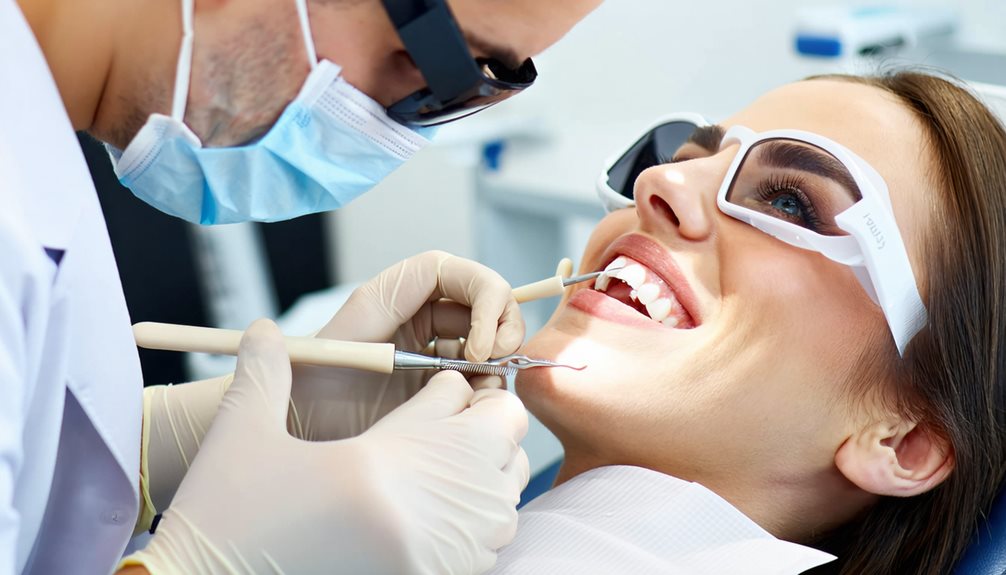
A cost-effective approach to teeth whitening combines professional insights with patient-specific needs, ensuring both safety and effectiveness. Professional treatments, such as in-office whitening and customized trays, offer rapid, noticeable results. These methods utilize powerful agents like hydrogen peroxide, expertly applied to minimize sensitivity and protect gums. For budget-friendly alternatives, consider ADA-approved at-home kits and whitening strips, which provide gradual improvement. Maintaining oral hygiene and avoiding staining substances extend the results, making this investment worthwhile. Consulting with dental professionals is essential to tailor treatments to your needs and avoid unnecessary expenses. The pathway to a brighter smile continues with expert recommendations.
Understanding Teeth Whitening
In the domain of dental aesthetics, understanding teeth whitening involves a thorough grasp of its procedures, benefits, and considerations. Teeth discoloration causes are multifaceted, ranging from intrinsic factors such as genetics and age to extrinsic influences like dietary habits and smoking.
As dental professionals, it is vital to distinguish these causes to tailor effective whitening treatments. A patient-focused approach necessitates debunking prevalent whitening myths. Many individuals falsely believe that over-the-counter products offer immediate and universal results. In reality, results vary markedly based on the nature of discoloration and the individual’s oral health profile.
Technical expertise in teeth whitening reveals that professional treatments offer superior outcomes due to customized solutions and advanced techniques. Patients should be informed about the preventive approach, emphasizing the importance of maintaining oral hygiene and regular dental check-ups to sustain whitening effects.
In addition, innovation in whitening technologies, such as laser-assisted treatments, presents new opportunities for achieving desired results with minimal sensitivity. Encouraging a proactive stance in dental care, it is essential to educate patients on realistic expectations and the importance of professional guidance.
This allows for informed decisions, ensuring that whitening procedures not only enhance aesthetics but also align with long-term dental health goals.
Choosing the Right Products
Selecting the appropriate teeth whitening products is essential for both effectiveness and safety.
Whitening strips offer the advantage of convenience and targeted application, while effective whitening toothpastes can provide gradual and consistent results with regular use.
For those preferring a more holistic approach, natural whitening alternatives such as baking soda or activated charcoal may be considered, though it is important to evaluate their efficacy and potential impact on oral health.
Whitening Strips Benefits
When considering the enhancement of your smile through teeth whitening, understanding the benefits of whitening strips can greatly influence your purchasing decision. Whitening strips offer a practical and scientifically backed solution for achieving a brighter smile. Their effectiveness arises from the active ingredients, typically hydrogen peroxide or carbamide peroxide, which penetrate the enamel to remove intrinsic stains.
For patients with sensitive teeth, selecting strips specifically designed to mitigate discomfort is essential. Innovations in formulations now include lower concentrations of whitening agents coupled with desensitizing ingredients, minimizing irritation while maintaining whitening strip effectiveness.
Moreover, whitening strips present an economically viable option compared to professional treatments. Their accessibility and ease of use make them an attractive choice for individuals seeking convenient home-based whitening solutions.
For those prioritizing a preventive approach, the judicious use of whitening strips can complement regular dental hygiene practices, ensuring sustained oral health while enhancing aesthetics.
To maximize benefits, it is advisable to follow the manufacturer’s instructions meticulously, adjusting frequency and duration as needed for best results. By understanding sensitive teeth considerations and the diverse product offerings available, you can select whitening strips that best suit your individual needs, paving the way for a radiant, confident smile.
Effective Whitening Toothpaste
A myriad of whitening toothpastes are available on the market today, each employing various active ingredients to help remove surface stains and enhance the brightness of your smile. Selecting the right product requires understanding the nuances of whitening ingredients and their respective efficacy.
Common active components include hydrogen peroxide, which gently bleaches teeth, and mild abrasives such as silica or calcium carbonate, which polish away stains. Enzyme-based formulations are also gaining popularity due to their gentle yet effective stain removal properties.
Toothpaste effectiveness is contingent on consistent use and the nature of the discoloration. While whitening toothpastes are adept at addressing extrinsic stains—those caused by coffee, tea, or tobacco—patients should be aware they might not alter intrinsic discoloration stemming from deeper within the tooth structure.
For ideal results, it is advisable to incorporate these toothpastes as part of a thorough oral hygiene routine that includes regular brushing, flossing, and professional dental cleanings.
Patients seeking innovative solutions should prioritize products endorsed by dental professionals and those that carry the American Dental Association (ADA) Seal of Acceptance. This guarantees the toothpaste has been scientifically validated for both safety and efficacy, paving the way for a brighter, healthier smile.
Natural Whitening Alternatives
While traditional whitening toothpastes offer a reliable method for enhancing dental aesthetics, many patients are increasingly exploring natural alternatives to achieve a brighter smile. The appeal of these methods lies in their accessibility and minimal chemical exposure, aligning well with a preventive approach to oral health.
Among the most popular natural whitening agents, coconut oil and baking soda stand out due to their multifaceted benefits.
Coconut oil, used in oil pulling, leverages its lauric acid content to reduce plaque buildup and harmful oral bacteria, which can indirectly lead to a whiter smile. This ancient practice requires swishing a tablespoon of coconut oil in the mouth for 15-20 minutes, allowing its natural properties to cleanse and protect the teeth.
Baking soda, a mild abrasive, helps remove surface stains while maintaining the tooth enamel‘s integrity. Its alkaline nature also neutralizes acids in the mouth, contributing to overall oral health. Patients can create a simple paste by mixing baking soda with water and brushing gently a few times a week.
For those seeking innovative, cost-effective solutions, integrating these natural alternatives can complement traditional dental care, promoting both aesthetic and health benefits.
In-Office Treatments
In-office whitening treatments offer a range of professional options that utilize advanced technology to achieve ideal results while prioritizing patient comfort and safety.
While these treatments can provide significant improvements in tooth color in a relatively short time, it is essential for patients to evaluate the cost implications and weigh them against the potential long-term benefits.
A thorough consultation with a dental professional can help tailor the most suitable treatment plan, ensuring both efficacy and value.
Professional Whitening Options
Professional dental whitening treatments offer patients a highly effective solution for achieving a brighter smile.
Dentists employ powerful bleaching agents that are not available in over-the-counter products, ensuring a higher degree of whitening.
In-office whitening typically involves the use of hydrogen peroxide or carbamide peroxide gels, which are activated by specialized light or laser systems. These innovative technologies accelerate the whitening process, allowing patients to achieve desired results in as little as one hour.
This patient-focused approach not only enhances convenience but also minimizes the risk of tooth sensitivity, a common concern in whitening treatments.
Moreover, dentists provide personalized guidance on maintaining results and preventing future discoloration, emphasizing a preventive approach to oral health. This tailored advice empowers patients to sustain their brighter smiles, aligning with their desire for innovative dental solutions that prioritize both aesthetics and safety.
Treatment Cost Considerations
When considering in-office teeth whitening, understanding the associated costs is integral for making an informed decision. The financial aspect of this cosmetic enhancement often varies based on factors such as treatment duration and the specific technology employed.
While in-office whitening is known for delivering immediate results, patients must assess whether the investment aligns with their dental health priorities and budgetary constraints.
In-office treatments often present a premium price point, reflecting the professional expertise and advanced equipment utilized. However, patients should be aware that:
- Treatment duration: Sessions typically last 60-90 minutes, impacting the overall cost.
- Technological innovation: Modern laser or light-activated systems might increase fees.
- Repeat sessions: Some patients may require multiple visits, influencing cumulative expenses.
- Insurance coverage: Generally, cosmetic procedures are not covered, necessitating out-of-pocket payment.
- Preventive benefits: Professional oversight minimizes risks, potentially averting costly corrective treatments.
For those seeking cutting-edge whitening solutions, discussing financial options with dental professionals is advisable.
Many practices offer payment plans or promotions to ease upfront costs, catering to the innovative-minded patient.
Ultimately, evaluating the cost of in-office whitening within the context of its benefits and potential risks informs a balanced, patient-centered decision-making process.
At-Home Whitening Kits
Although achieving a brighter smile is enticing, selecting the right at-home whitening kit necessitates an informed approach to guarantee both effectiveness and safety. At-home whitening kits offer an accessible solution, yet it is vital to evaluate the concentration of active whitening agents, such as carbamide or hydrogen peroxide.
These agents, when used correctly, can effectively lighten the enamel. However, it is essential to adhere to recommended whitening frequency to prevent enamel erosion and tooth sensitivity.
When evaluating at-home safety, one should look for products with the American Dental Association (ADA) Seal of Acceptance, which confirms that the product meets established safety and efficacy standards.
Customization in whitening trays can also enhance safety by limiting gum exposure to bleaching agents, thereby reducing the risk of irritation.
A preventive approach is necessary: individuals should consult their dental professional before beginning any at-home whitening regimen. This guarantees that underlying issues such as cavities or gum disease are addressed, preventing potential complications.
Innovative developments in at-home kits include the integration of LED light technology, which can accelerate the whitening process while minimizing exposure time, aligning perfectly with the desires of a forward-thinking audience seeking efficient and safe solutions.
Tips for Long-Lasting Results
Maintaining the brightness of your smile long after the initial whitening treatment requires a strategic and patient-focused approach.
To guarantee enduring results, it is vital to integrate specific daily habits and make informed dietary choices. By adopting routine preventive measures, patients can maximize the longevity of their whitening results, reducing the need for frequent touch-ups.
-
Consistent Oral Hygiene: Brush twice daily with a whitening toothpaste and floss regularly to remove stains and prevent plaque buildup.
-
Mindful Dietary Choices: Limit consumption of staining agents such as coffee, tea, red wine, and dark berries. Opt for alternatives like water, herbal tea, and white wine.
-
Regular Dental Check-Ups: Schedule bi-annual visits to your dentist for professional cleanings, which can help maintain your teeth’s brightness.
-
Use of Whitening Trays: Employ custom-fitted whitening trays at home as recommended by your dentist to reinforce professional treatments.
-
Avoid Tobacco Products: Smoking and tobacco use can lead to discoloration, undermining whitening efforts. Abstaining will preserve the results and improve overall oral health.
Comparing Whitening Costs
While the desire for a brighter smile is common, understanding the financial implications of teeth whitening can help patients make informed decisions. The costs associated with teeth whitening can vary considerably, influenced by the type of treatment selected, the degree of discoloration, and the frequency of maintenance required.
Professional in-office whitening, while often perceived as the most effective due to recent whitening technology advancements, tends to be the most expensive option, ranging from $300 to $1,000 per session.
On the other hand, at-home whitening kits, which leverage the same principles of peroxide-based bleaching with modern enhancements, offer a more budget-friendly solution. These typically range from $20 to $150, depending on the brand and concentration of active ingredients. Such options allow patients to integrate cost-effective solutions into their personal budget planning.
It is essential for patients to weigh the upfront costs against the long-term benefits, considering factors such as the duration of results and potential need for repeat treatments. Consulting with a dental professional can provide clarity on the most suitable option, ensuring both financial prudence and ideal oral health outcomes.
Evaluating these variables enables patients to invest in a smile that aligns with both their aesthetic aspirations and financial capabilities.
Frequently Asked Questions
Are There Any Natural Remedies for Teeth Whitening?
There are natural remedies for teeth whitening, such as using baking soda for its mild abrasive properties and coconut oil for oil pulling. These methods can complement a preventive approach, offering innovative, patient-focused solutions for dental care.
Can Dietary Changes Impact the Effectiveness of Whitening Treatments?
Dietary impacts play a significant role in whitening effectiveness. Consuming stain-inducing foods and beverages can diminish results, whereas a preventive approach involving nutrient-rich, non-staining foods may enhance and prolong the whitening effects, catering to innovative patient needs.
How Does Teeth Whitening Affect Dental Fillings or Crowns?
Teeth whitening treatments do not alter the color of existing dental fillings or crowns. Filling discoloration may become more apparent, while crown materials remain unaffected. A preventive approach guarantees innovative solutions for achieving uniform tooth aesthetics.
Are There Any Age Restrictions for Teeth Whitening Treatments?
Teeth-whitening regulations emphasize age-related considerations, typically recommending treatments for individuals over 16 due to enamel maturity. A patient-focused, preventive approach guarantees that younger patients’ oral health is safeguarded while promoting innovative, safe whitening techniques for suitable candidates.
What Are the Potential Side Effects of Overusing Whitening Products?
Excessive use of whitening products can result in tooth sensitivity and gum irritation. Adopting a preventive approach, it is essential for patients to seek professional guidance to minimize these risks and explore innovative, less abrasive whitening alternatives.
Conclusion
Teeth whitening, a significant aspect of dental aesthetics, can be achieved effectively through informed choices between in-office treatments and at-home kits. A thorough understanding of whitening products and their appropriate use is fundamental for ideal results. Emphasizing a preventive approach, maintaining oral hygiene and dietary habits plays a significant role in prolonging the effects of whitening procedures. Cost considerations are essential, necessitating a balance between affordability and efficacy to guarantee patients achieve desired outcomes without compromising dental health.